A cricket match may change without announcement. The bowler walks back to the mark, the batter settles down once more and the crowd expects the next ball. Then the umpires talk, the players depart, and the covers start to move from the boundary.
The live score now says “play suspended.”
That word can look serious at first glance. In cricket, it means the match has paused and remains open. The suspended meaning in cricket is this: play has stopped because the conditions are unsuitable at that moment, but the match can continue if the problem clears in time.
The score remains on the board. The overs already bowled remain counted. The decision now depends on the umpires, the ground condition, and the playing time left in the match.
The Plain Meaning Fans Should Know
The suspended meaning in cricket is a temporary stoppage after the match has reached an active stage. Play may have already started, or the teams may be ready to restart after an interval. Then a condition changes, and officials decide that continuing would create an unfair or risky situation.
Imagine a chase of 180. The batting side reaches 52 for 1 after seven overs. Rain gets heavier, and the umpires walk the players off. The match is now suspended. If the rain clears and the ground passes inspection, the chase resumes from 52 for 1.
Nothing resets because of the suspension. The batter on strike stays involved. The bowler’s over continues from the legal balls already delivered. The wickets, runs, and overs remain part of the match.
What Can Stop Play Mid-Match?
Rain is the first thing viewers notice because it changes the whole ground in seconds. The covers come in from the boundary, players head back, and the pitch disappears from sight. The real decision begins after the shower weakens.
The umpires then look beyond the pitch. A wet outfield can make fielders slide badly. A soft bowler’s run-up can ruin the landing stride. A damp patch near the crease can make the ball behave strangely. These small areas decide whether play can safely restart.
Bad light brings a different kind of problem. Batters must pick the ball early, mainly against pace. If the ball becomes hard to see, the match cannot continue just because overs are still left in the day.
Other causes can also force a stoppage:
- Floodlight failure during a night match
- Lightning close to the venue
- Smoke drifting near the ground
- Damaged pitch or wet landing areas
- Sight screen trouble behind the bowler
- Crowd disturbance inside the stadium
- Security concern around the ground
- Power failure affecting match operations
The reason may change from match to match. The basic call remains the same. Cricket pauses when players cannot run, bowl, bat, field, or judge the ball without avoidable risk.
How Live Score Updates Should Be Read
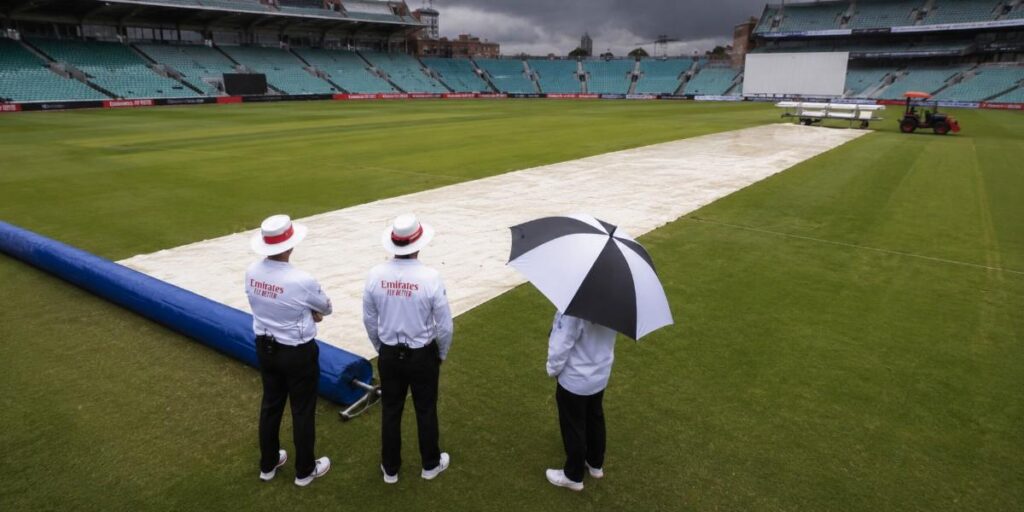
The cricket match suspended meaning on a live scorecard is simple: wait for the next official update. The match has not produced a final call yet.
During this period, the broadcast may show covers, ground staff, damp patches, or players waiting inside the dressing room. Score platforms may use lines such as “inspection at 8:15” or “play to resume at 8:40.” Those lines matter because they show the direction of the match.
Here are the updates fans should watch closely:
- Inspection time
- Restart time
- Overs reduced
- Revised target
- Match abandoned
- No result declared
A suspended match can still produce a full finish, a shortened finish, or no result. The next update generally tells which path looks likely.
Suspended, Delayed, Postponed, and Abandoned
Cricket coverage uses these words quickly, and they are easy to mix up. Each one points to a different stage of the match.
- Suspended: The match has reached an active stage, but play has stopped because conditions have become unsuitable.
- Delayed: The match has not started at the scheduled time because the ground, weather, light, or arrangements are not ready.
- Postponed: The match has been moved to a later date before it can happen as planned.
- Abandoned: The match has been called off under match conditions and will not continue that day.
This difference matters because a suspended match still has room to return. An abandoned match has already reached the final call for that day.
Suspended vs Abandoned in Cricket
The phrase suspended vs abandoned in cricket creates confusion during rain breaks. The difference lies in the status of the match.
Suspended means the umpires are still waiting. They believe there may be enough time or enough improvement for play to restart. The players stay near the match environment because a return remains possible.
Abandoned means officials have reached the end of the road for that day. The ground may still be wet, the light may have gone, or the available time may have disappeared. After that decision, the match result follows the tournament rules.
Some matches get reserve days, mainly in important knockout games. Many league games do not get that option, so the result may become no result if the minimum play requirement is missed.
Can a Suspended Match Resume?
A suspended match can resume when the original problem is solved within the allowed time. Rain can stop. Light can improve. Ground staff can dry a wet area. A technical fault can be repaired.
The restart does not create a fresh match. Play continues from the same score and same match situation. If a bowler stopped midway through an over, that over generally continues from the next legal ball.
Limited-overs cricket may need extra calculations after a long break. The number of overs can be reduced, and the target can change through the Duckworth Lewis Stern method. A small delay may change nothing at all.
Test cricket works differently. Lost time may be recovered through extra time on the same day or adjusted playing time across later days, depending on the match rules.
What Happens to Runs, Wickets, and Overs?
A suspension does not erase the cricket already played. A score of 86 for 3 remains 86 for 3. A batter on 42 remains on 42. A bowler with two wickets keeps those wickets.
This point matters for scorecards, player records, and fantasy cricket users. The match may pause, but the numbers already recorded still belong to the game.
If the match later ends without a result, those numbers can still appear in the match record. The final result line may say no result or abandoned, but the score does not disappear.
Minimum Overs Needed for a Result
A limited-overs match needs a minimum amount of second-innings play before officials can declare a normal result.
- In twenty-over cricket, the chasing team generally needs at least five overs.
- In fifty-over cricket, the chasing team generally needs at least twenty overs.
- Tournament playing conditions can adjust these rules.
- Without the minimum overs, the match cannot have a standard result.
- League matches may give both teams shared points.
- Knockout matches may use a reserve day or a pre-decided tie-break rule.
A match can restart after suspension and still finish without a result. That happens when so much time has already passed.
A Match Situation That Explains It Clearly
A side needs 180 in a twenty-over chase. After seven overs, the score is 52 for 1. Dark clouds arrive, rain begins, and the umpires stop play.
The scoreboard stays at 52 for 1. The batting side has not lost its progress. The fielding side keeps the wicket it has taken. Everyone waits for the next inspection.
If the ground dries quickly, the chase continues. If the break lasts longer, the overs may reduce and the target may change. If the minimum overs cannot be completed, the match may end without a result.
This match picture captures the suspended meaning in cricket better than any rulebook line.
Final Word for Cricket Fans
A suspended match is still breathing. The players have left the field, but the match has not been buried.
The next update decides the direction. Play may restart, the target may change, or the match may run out of time. When the live score says suspended, read it as a pause with possibilities until officials give the final call.
FAQs
Do player statistics count when a match is suspended?
Runs, wickets, catches, and overs already recorded generally remain on the scorecard. A suspension does not remove completed play. Final record treatment depends on the match status and the tournament playing conditions.
Can a suspended match continue on another day?
A suspended match can continue on another day only when the tournament has a reserve-day rule. This is common in major knockout matches. League matches may instead finish with no result.
Why does play stay stopped after rain has ended?
Rain can end before the ground becomes safe. Wet run-ups, soft landing areas, and slippery outfields can still injure players. Umpires wait until normal cricket movement becomes possible again.
What happens if a match has no result?
A no result is recorded when the minimum playing requirement is not met. League matches may share points. Knockout matches follow the event rules, which may include a reserve day or ranking-based decision.
Can a captain request suspension of play?
A captain can raise concern about light, ground safety, or player risk. That request does not stop the match by itself. The umpires assess the conditions and make the official decision.